
Académie suisse des sciences naturelles SCNAT
Roles of Scientists in Sustainability Transformations: A Guide for Reflection and Workshop Facilitation
Scientists, scientific experts, and knowledge brokers often find themselves in situations where they need to play new roles in society or are criticised for positioning themselves at the interface between science and other societal fields of action. The present guide aims to stimulate reflections on, and discussions of, various different roles that scientists perform.
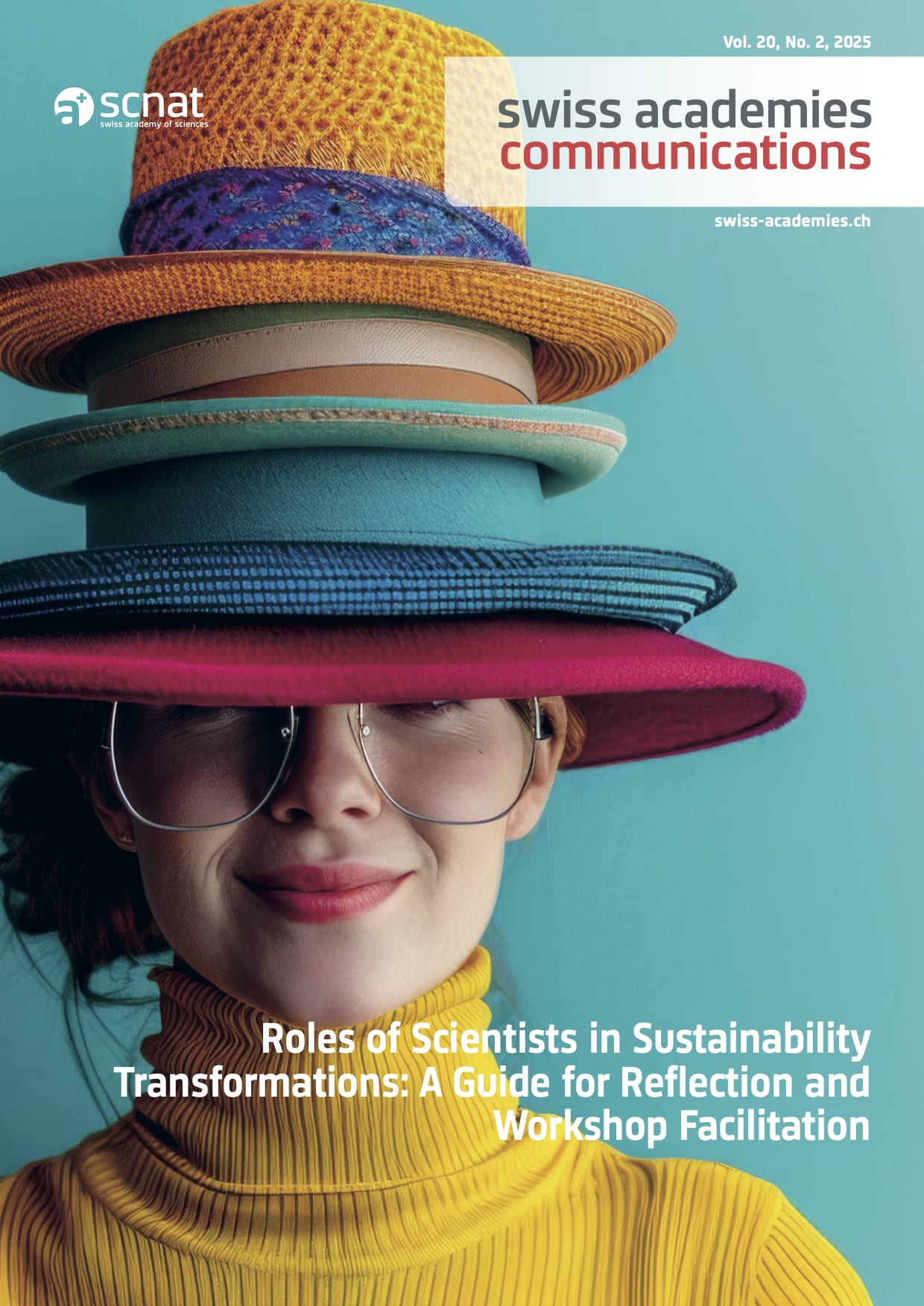
The guide is based on insights from the literature that underline how role variety and role clarity enhance the quality of science and its support for society – in the context both of sustainability-oriented science and of science that does not have this normative orientation. It invites readers to explore the different roles that scientists can be expected to or may intuitively intend to perform – and to value the strength and purpose of each of these different roles.
Studer S, Marfurt F, Zimmermann AB, Behringer J (2025): Roles of Scientists in Sustainability Transformations: A Guide for Reflection and Workshop Facilitation. Swiss Academies Communications 20 (2)
Académie suisse des sciences humaines et sociales
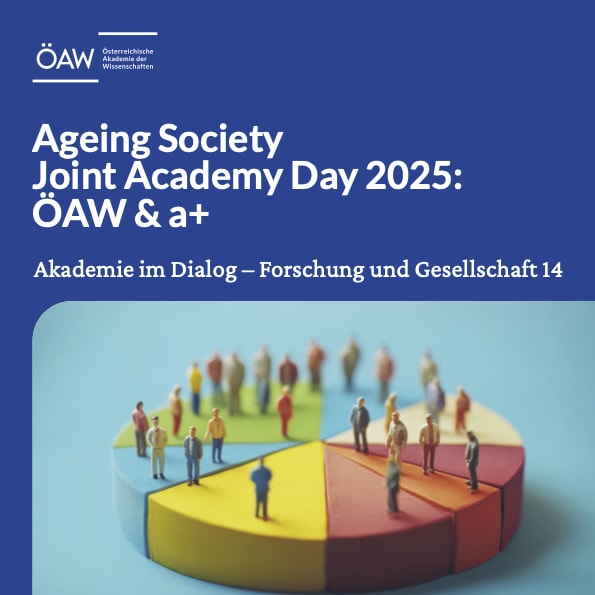
Ageing Society: regards croisés sur une société qui vieillit
Comment penser l’âge et le vieillissement de manière plus différenciée?
La publication consacrée au Joint Academy Day 2025, organisé par l’Académie autrichienne des sciences (ÖAW) avec la participation des Académies suisses des sciences (a+), réunit des perspectives interdisciplinaires sur les dimensions sociales, économiques, culturelles et éthiques du vieillissement.
Les contributions invitent à considérer l’âge et le vieillissement non seulement comme un défi, mais dans toute leur diversité et comme un enjeu pour l’ensemble de la société.
Jeune Académie Suisse JAS

Compassionate Science - Integrating Empathy and Compassion in Research
This report explores how empathy and compassion shape research practices across disciplines. Drawing on a review of existing literature and illustrative examples from early-career researchers, it shows that empathy and compassion are not abstract ideals but practical dimensions of research that can influence study design, relationships, data interpretation, and knowledge translation. Across fields, integrating these dimensions can strengthen trust, deepen understanding, improve collaboration, and enhance ethical reflexivity.
Académies suisses des sciences

Coûts de construction et financement de nouvelles centrales nucléaires en Suisse
Le présent rapport propose une analyse détaillée de l’évolution observée des coûts de construction de nouvelles centrales nucléaires et examine les coûts potentiels d’une éventuelle nouvelle construction en Suisse ainsi que les incertitudes qui y sont liées. Il présente en outre les modèles de financement actuels en Europe ainsi que les risques financiers liés à une telle construction pour l’État et les entreprises privées.