
Académie suisse des sciences naturelles SCNAT
Nouvelles techniques de sélection végétale pour l’agriculture suisse – gros potentiel, avenir ouvert
SWISS ACADEMIES FACTSHEETS, VOL. 11, NO 4, 2016
Mit neuen Techniken lässt sich das Erbgut von Pflanzen präzise verändern. In den meisten Fällen könnten diese Veränderungen auch natürlich entstehen und es bleibt keine artfremde DNA in der Pflanze zurück. Die Techniken erweitern die Möglichkeiten in der Pflanzenzüchtung wesentlich und könnten so zu einer umweltverträglicheren, wirtschaftlicheren und letztlich nachhaltigeren Schweizer Landwirtschaft beitragen. Da bereits erste Sorten existieren und weitere in Kürze folgen werden, gilt es dringend abzuklären, ob Pflanzen, die mit Hilfe dieser neuen Techniken entwickelt werden, unter das Gentechnikgesetz fallen oder nicht. Aus naturwissenschaftlicher Sicht gibt es keinen Grund für eine strenge Regulierung so gezüchteter Pflanzen.
Akademien der Wissenschaften Schweiz (2016) Neue Pflanzenzüchtungstechniken für die Schweizer Landwirtschaft – grosses Potenzial, offene Zukunft. Swiss Academies Factsheets 11 (4).

Académie suisse des sciences humaines et sociales
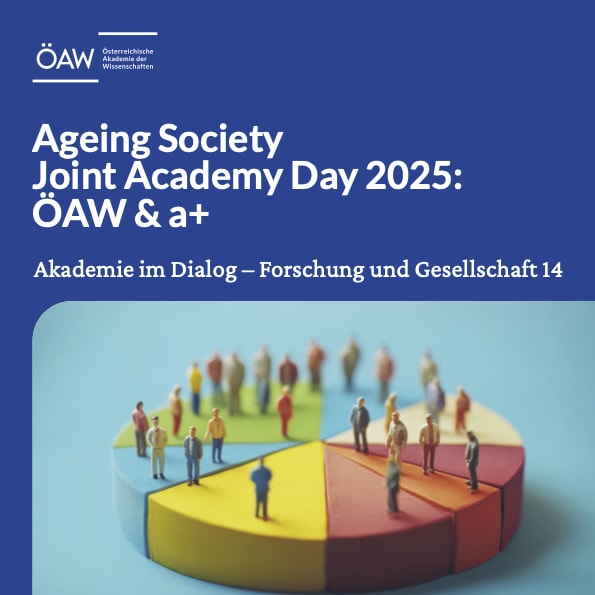
Ageing Society: regards croisés sur une société qui vieillit
Comment penser l’âge et le vieillissement de manière plus différenciée?
La publication consacrée au Joint Academy Day 2025, organisé par l’Académie autrichienne des sciences (ÖAW) avec la participation des Académies suisses des sciences (a+), réunit des perspectives interdisciplinaires sur les dimensions sociales, économiques, culturelles et éthiques du vieillissement.
Les contributions invitent à considérer l’âge et le vieillissement non seulement comme un défi, mais dans toute leur diversité et comme un enjeu pour l’ensemble de la société.
Jeune Académie Suisse JAS

Compassionate Science - Integrating Empathy and Compassion in Research
This report explores how empathy and compassion shape research practices across disciplines. Drawing on a review of existing literature and illustrative examples from early-career researchers, it shows that empathy and compassion are not abstract ideals but practical dimensions of research that can influence study design, relationships, data interpretation, and knowledge translation. Across fields, integrating these dimensions can strengthen trust, deepen understanding, improve collaboration, and enhance ethical reflexivity.
Académies suisses des sciences

Coûts de construction et financement de nouvelles centrales nucléaires en Suisse
Le présent rapport propose une analyse détaillée de l’évolution observée des coûts de construction de nouvelles centrales nucléaires et examine les coûts potentiels d’une éventuelle nouvelle construction en Suisse ainsi que les incertitudes qui y sont liées. Il présente en outre les modèles de financement actuels en Europe ainsi que les risques financiers liés à une telle construction pour l’État et les entreprises privées.